
The mechanisms by which insurance markets translate physical hazards into financial terms
Insurance companies have, perhaps, the most economic skin in the game when it comes to getting climate and extreme weather risk “right.” They are the primary mechanism by which physical climate risk becomes a financial variable for property owners. Understanding how insurers price risk illuminates why climate-aware investing matters.
Insurance as a Climate Signal
Insurance premiums reflect the expected cost of future losses, plus administrative costs and capital charges. When insurers reprice risk, these changes flow directly through to property owners:
|
Higher premiums |
Increased deductibles |
|
Narrower coverage |
Operational disruption |
|
Refusal to write new business in high-risk areas |
Market withdrawal and uninsurability |
For REITs and other real estate investors, these changes show up in operating costs, earnings volatility, and can even impact the ability to secure or retain financing.
The Repricing Cycle
Insurance markets do not adjust smoothly. They tend to reprice rapidly and discontinuously following large loss events or when accumulated evidence shifts risk assessments.
Loss Event
A major hurricane, wildfire season, or flood causes significant insured losses
Model Updates
Catastrophe modelers incorporate new data and revise risk estimates
Underwriting Response
Insurers adjust rates, tighten terms, or withdraw from certain markets
Property Impact
Property owners face higher costs, reduced coverage, or uninsurable assets
Regional Rate Variations
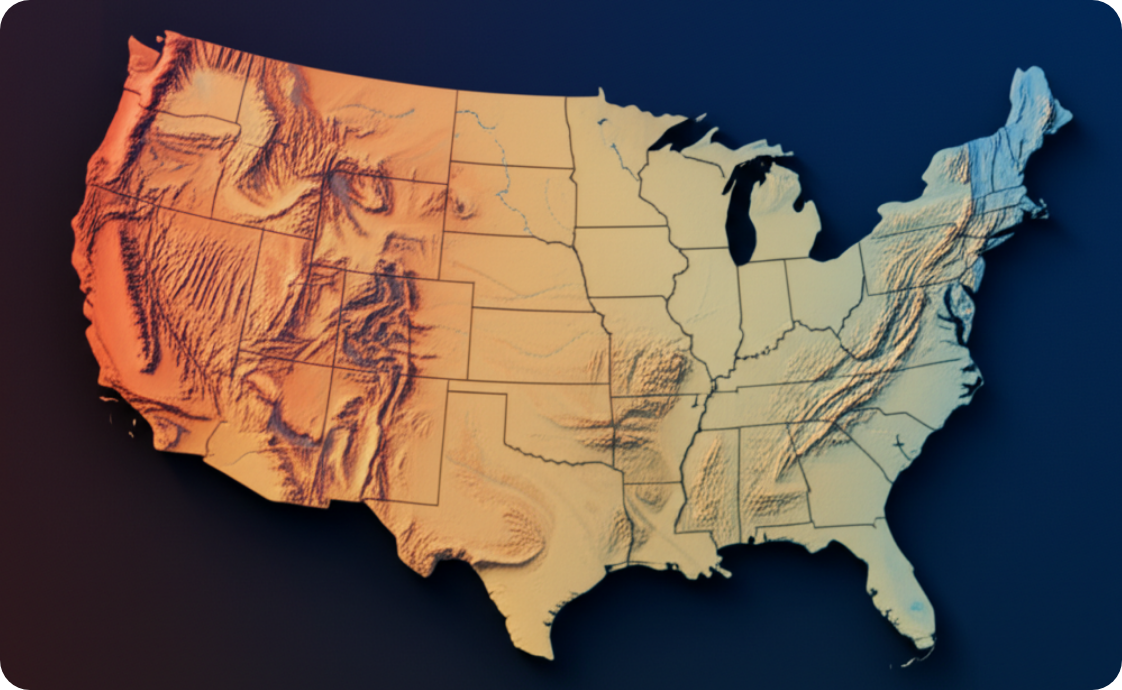 Insurance pricing is inherently geographic. Properties in coastal Florida face dramatically different risk profiles than those in the Midwest. This creates significant regional variations in insurance costs and availability.
Solvency and Regulatory Requirements
Insurers are capital-constrained entities. Regulators require them to demonstrate solvency under extreme but plausible scenarios—often “1-in-200-year” events. This regulatory pressure drives sophisticated risk modeling and conservative capital allocation.
Reinsurers, whose portfolios are globally diversified but highly tail-exposed, rely on these models even more heavily. Their ability to price and absorb catastrophic risk depends on accurate quantification of extreme events.
What Insurers Know That Markets Don’t (Yet)
The insurance industry has invested hundreds of millions of dollars in catastrophe modeling, data collection, and risk analytics. Their pricing reflects:
• Property-level hazard exposure across multiple perils
• Building characteristics that affect vulnerability
• Geographic concentration and correlation risk
• Forward-looking climate projections
Public equity markets often price real estate assets as if physical risk were uniform within sectors.
Public equity markets, by contrast, often price real estate assets as if physical risk were uniform within sectors. This creates potential mispricing that climate-aware investors can identify and avoid.
The Asset-Liability Mismatch
Real estate assets are long-lived—buildings typically have useful lives of 30-50+ years. But insurance and financing terms reset frequently, often annually. This mismatch means that changes in physical risk or insurance conditions can surface quickly, altering a property’s economics without any change in location or use.
Implications for Investors
A REIT with a geographically concentrated portfolio in high-risk areas may face compounding insurance cost increases over time, even if the underlying properties remain physically unchanged. Climate-aware index construction can help identify and avoid this concentration risk.
Why This Matters for REIT Investors
REITs own and operate real estate across the United States. Their portfolios are directly exposed to insurance cost changes, and their disclosed operating expenses reflect these realities. By using the same analytical frameworks that insurers use—calibrated with decades of actual loss data—investors can better assess which REITs are positioned to weather the changing risk landscape.
Learn more about CLIM ETF. View Fund Summary >
Carefully consider the Funds’ investment objectives, risk factors, charges and expenses before investing. This and additional information can be found in the Fund’s Prospectus and Summary Prospectus, which may be obtained by visiting www.climateglobaletf.com. Read the Prospectus and Summary Prospectus carefully before investing.
The Fund is distributed by Foreside Fund Services, LLC. Exchange Traded Concepts, LLC serves as the investment advisor. The Fund is distributed by Foreside Fund Services, LLC., which is not affiliated with Climate Global, Exchange Traded Concepts, LLC, or any of its affiliates.
Investing involves risk, including possible loss of principal. The Fund’s return may not match or achieve a high degree of correlation with the return of the Index. To the extent the Fund’s investments are concentrated in or have significant exposure to a particular issuer, industry or group of industries, or asset class, the Fund may be more vulnerable to adverse events affecting such issuer, industry or group of industries, or asset class than if the Fund’s investments were more broadly diversified. Issuer-specific events, including changes in the financial condition of an issuer, can have a negative impact on the value of the Fund.
A new or smaller fund is subject to the risk that its performance may not represent how the fund is expected to or may perform in the long term. In addition, new funds have limited operating histories for investors to evaluate and new and smaller funds may not attract sufficient assets to achieve investment and trading efficiencies.
Shares are bought and sold at market price (closing price) not net asset value (NAV) and are not individually redeemed from the Fund. Market price returns are based on the midpoint of the bid/ask spread at 4:00pm Eastern Time (when NAV is normally determined) and do not represent the return you would receive if you traded at other times. Brokerage commissions will reduce returns.
